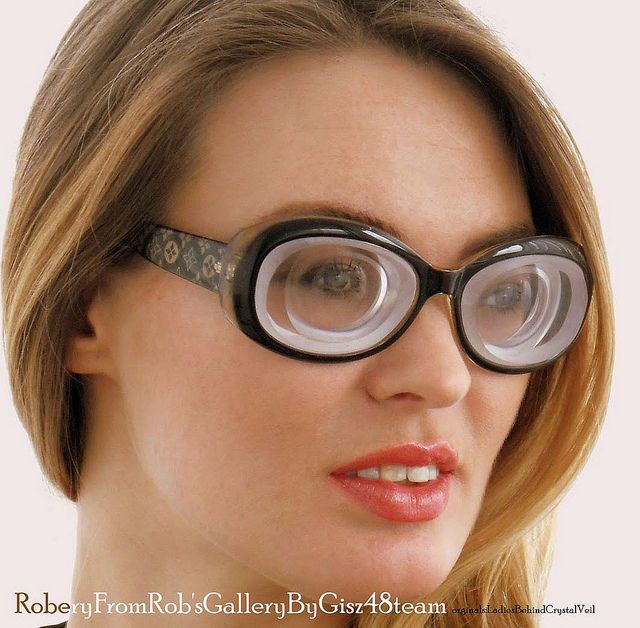
High Myopia And Blindness


Moderate myopia values of 3 00d to 6 00d.
High myopia and blindness. Myopia occurs when the eyeball grows too long during childhood. In extreme circumstances myopia nearsightedness can lead to serious vision threatening complications including blindness. Attributing vision loss to high myopia or mmd in blindness surveys rapid assessment of avoidable blindness who survey protocol and others it was agreed that the term myopic macular degeneration mmd should be used to define the retinal condition that causes vision impairment in myopia because it is clearly defined and.
People with high myopia are often affected with diseases like glaucoma and cataract affect both vision and ocular health. Patients with high myopia axial have longer length than normal so it is structure relatively weaker and likely to cause disease such as retinal detachment. High myopia is also called degenerative myopia.
Compared with those with normal vision or low myopia degree the axial length of high myopia is longer and the longer the axial length the higher the myopia degree. Compared to ordinary myopia high myopia does harm to our life and make it inconvenient but we should note that the resulting complications may cause eye lesions and even lead to blindness. Our two stage genome wide association study of myopic maculopathy identifies a susceptibility locus at rs11873439 in an intron of ccdc102b p 1 77 10 12 and p corr 1 61 10 10 in contrast this snp is not significantly associated with myopia.
And if you ignore that eye disease it will cause the high risk of retinal detachment thus to cause eventually blindness. Although high myopia itself will not be directly blind it will cause many complications that can cause blindness. This is sometimes known as simple myopia meaning that your eyes are healthy and that the blurriness that your myopia causes is easily corrected for with glasses or contact lenses.
Typically people who develop high myopia become nearsighted early in childhood and their myopia gets progressively worse year after year during the school years up to and sometimes beyond age 18 to 20. Therefore high myopia is one of the important causes of blindness. High myopia is usually myopia over 6 00d.
Progressive high myopia generally does not lead to permanent vision loss or blindness however axial elongation of the eye accompanied by progressive high myopia can lead to thinning of the light sensitive tissue known as the retina which in turn can lead to retinal tears and retinal detachment. The incidence of high myopia is increasing worldwide with myopic maculopathy a complication of myopia often progressing to blindness. High myopia is a relatively severe level of nearsightedness that can be associated with significant eye health complications.
The incidence of high myopia is increasing worldwide with myopic maculopathy a complication of myopia often progressing to blindness. Most people with myopia of less than 6 00d don t develop any further problems.